|
Ed Levin is open to members of all levels (From students
to Hang 5) according to the criteria described in the Ed
Levin Park Site Procedures document. Be certain you are
familiar with these procedures and meet all requirements before
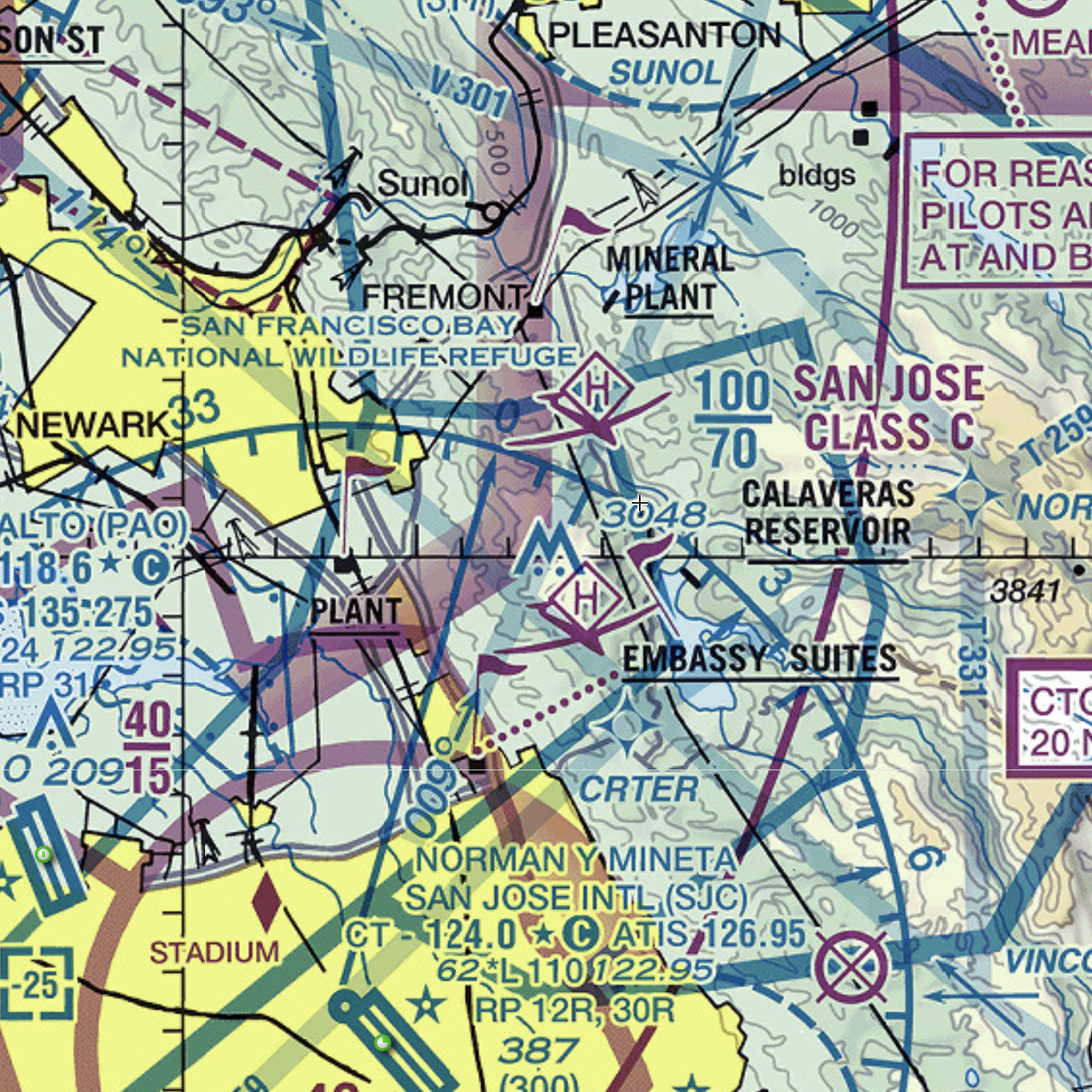
attempting to fly Ed Levin. Ed Levin Park is located in Milpitas, CA
|
Site Related Documents:
|
 |
Rules and Restrictions
See Summary page
and Ed Levin
Park Site Procedures for specifics.
Site committee
chairman
Steve Pittman
Emergency Information
Lock boxes at the 600 and 1750 foot launches contain telephones
for emergency use. Locate the lockboxes and learn the combinations
before flying Ed Levin. There is a pay phone in the LZ which can
be used for emergencies. Calls to 911 do not require any payment.
Please also print and review the Ed
Levin Emergency Procedures document.
Road Information for Ed Levin Park 408-355-2200, then menu 7, then menu 6
Launch Characteristics
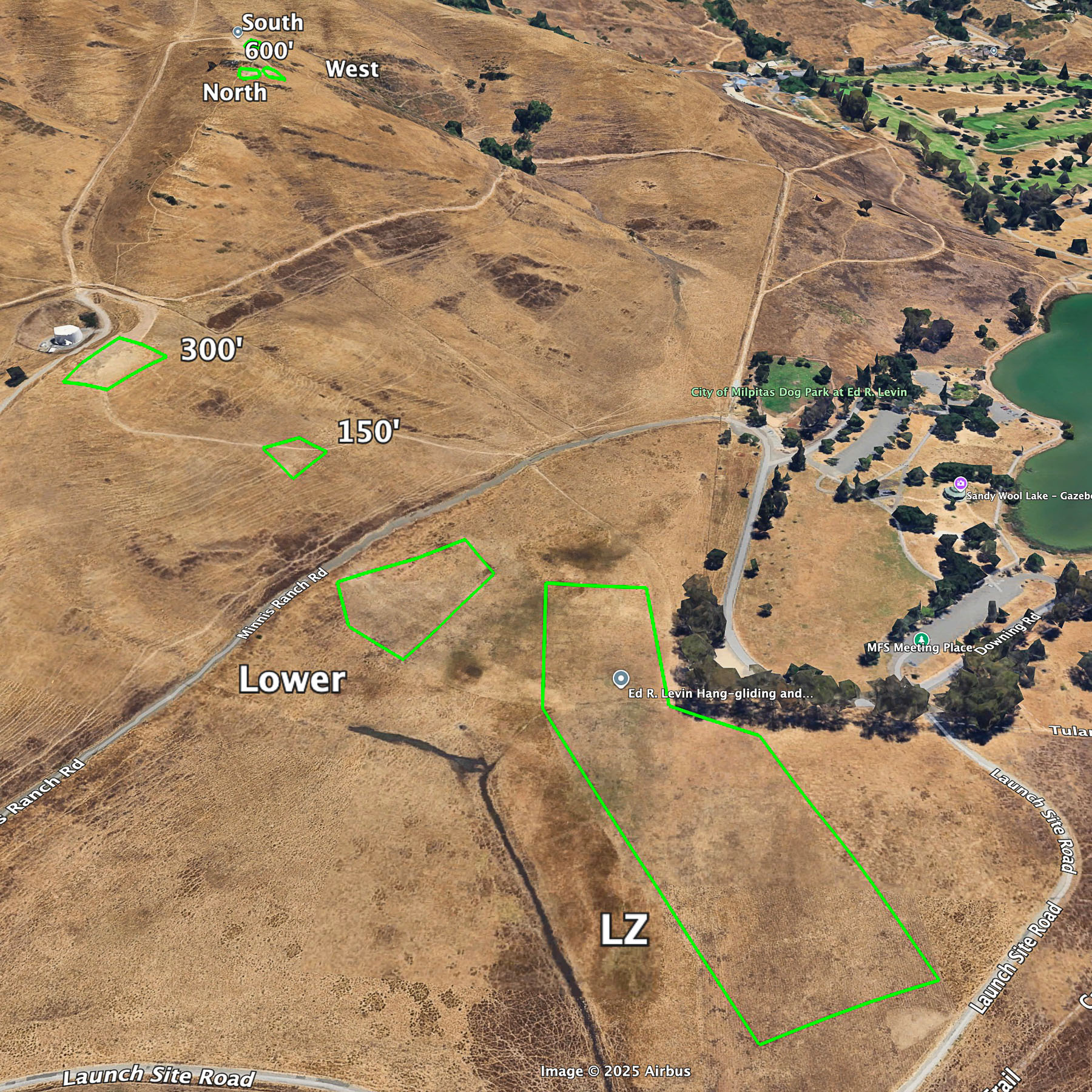
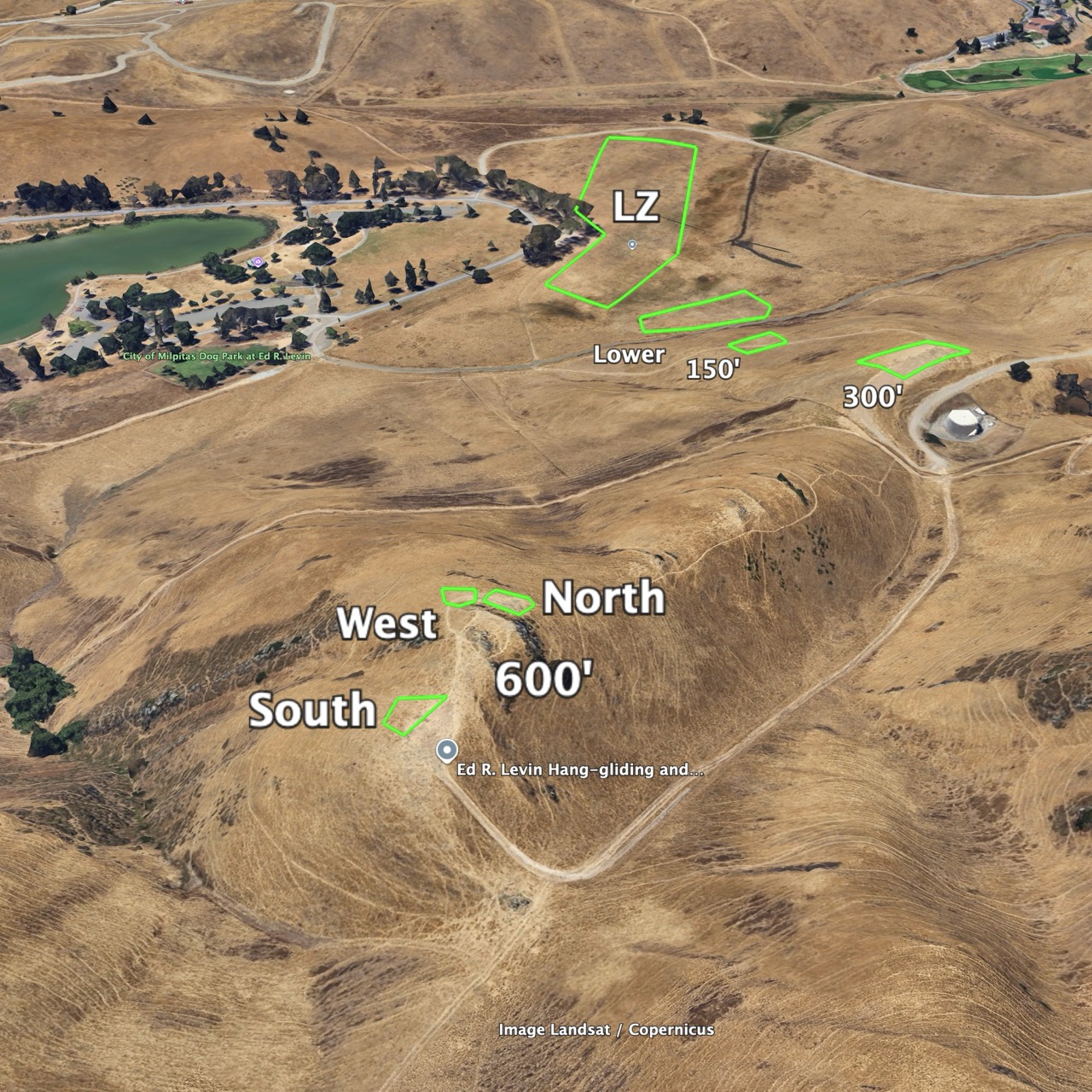
All of the launches at Ed Levin are grassy slopes. Most have
an excellent angle for encouraging great launches. There are no
trees or other obstructions at launch, nor are there any significant
upwind obstacles to create nasty rotors when launching into recommended
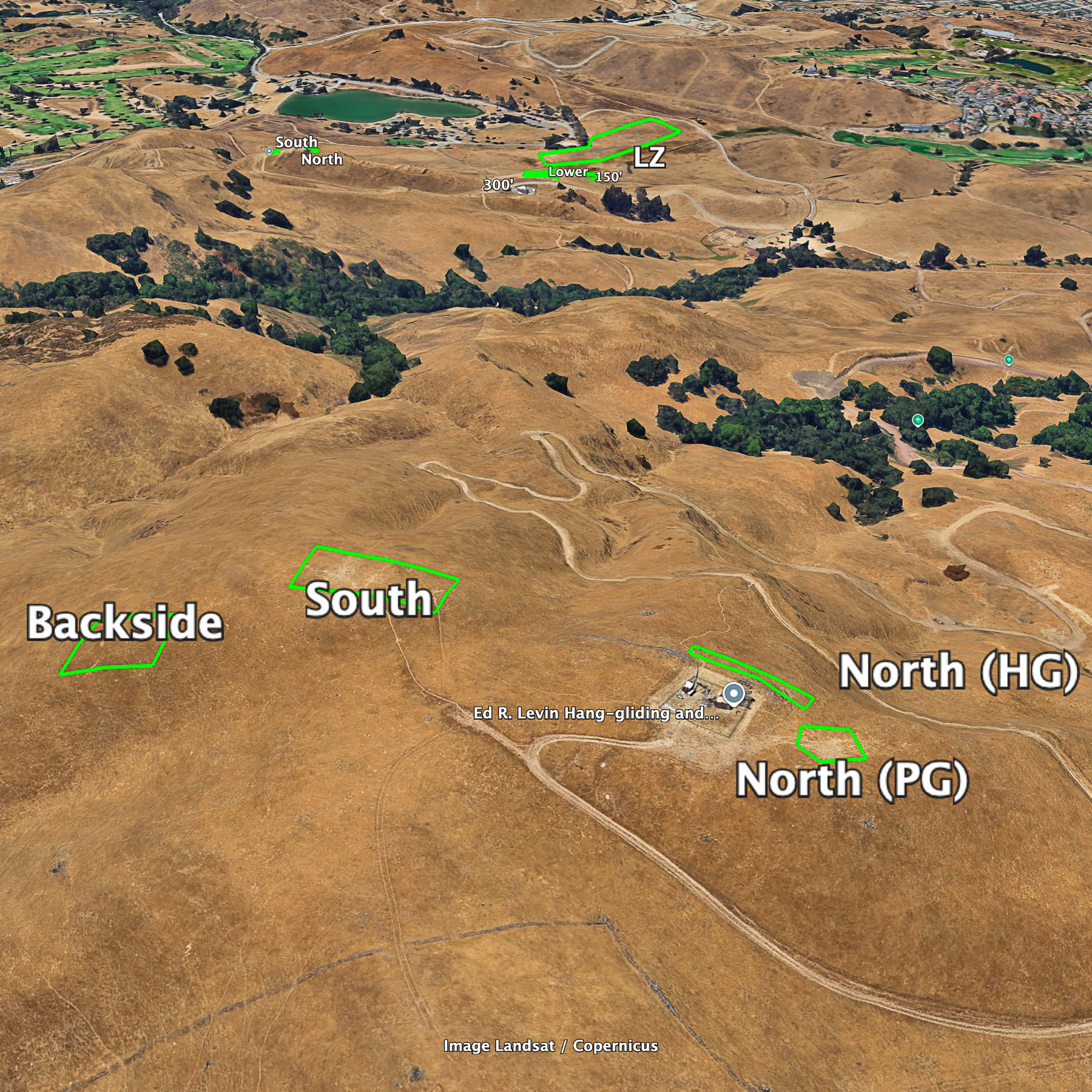
wind directions. Caution is required when launching from the back
side of the 1750 foot launch. Conditions which make this launch
useable often also rotor the LZ. When doing a backside launch, you
should head towards the LZ immediately, as you can get trapped on
the back side and not make the gap leading to the LZ. You should
think twice before using any launch when the wind talker (408-946-9516)
is calling out eastern winds. Even if the flags on the 300 and 600
foot hills appear to be favorable, it's often actually the rotor
from the top of the ridge curling around and blowing back up the
slope. In these conditions, launching might be uneventful, but you
may get hammered as you fly away from the hill, and have a scary
ride all the way to terra firma. The 40, 50, and 60 foot training
launches have a fairly shallow slope, and require aggresive take
off runs.
| Launch
Altitude in Feet AGL |
Best
Wind Direction |
| 40 |
NW |
| 50 |
SW |
| 60 |
S,SE |
| 100 |
SW |
| 300 |
W,SW,S |
| 600 |
W,SW,S,SE |
| 1750 |
NW,W,SW,S,E(marginal) |
| LZ Altitude in Feet
MSL |
Best Wind Direction |
| 400 |
WNW |
Landing Zone Characteristics
There is a single LZ at Ed Levin used by all launches. It is a
very large grassy field, with trees defining the southern and eastern
boundaries in sort of a tipped over "L" shape. If the wind is anything
between 90 and 270 degrees, you should take care to stay far enough
back of the trees trees to avoid any rotor. The most common direction
in the LZ is WNW, but it does vary, especially when fronts are passing
through. One of the attractive features of Ed Levin for the newer
pilot is that since all launches use the same LZ, for a given wind
condition the same landing approach can be used for any of the launches
at 300 feet or above. For example, one can fly from the 1750 foot
launch arriving over the LZ and burning off altitude until he is just
above the 600 foot hill. Then he can fly the same approach last used
from the 600 foot hill given similar conditions. As always though,
be aware of current conditions and don't count on everything being
the same as your last flight.
Best soaring conditions
Ed Levin is usually soarable from the top launches in pre-frontal
conditions. Post-frontal generally can't be done because the road
to the top is closed when wet. For the same reason, timing your pre-frontal
flights can be challenging. More than one pilot has had to leave their
vehicle on top until the road was dry enough to pass, sometimes several
days. Ed Levin is not generally thermal soarable in the summer due
to an omnipresent inversion, but some of the best pilots seem to be
able to break through the inversion or get long flights below it.
Legend has it that on perfect days, some pilots have launched the
600 foot hill and managed to work their way up the ridges and over
the top. |